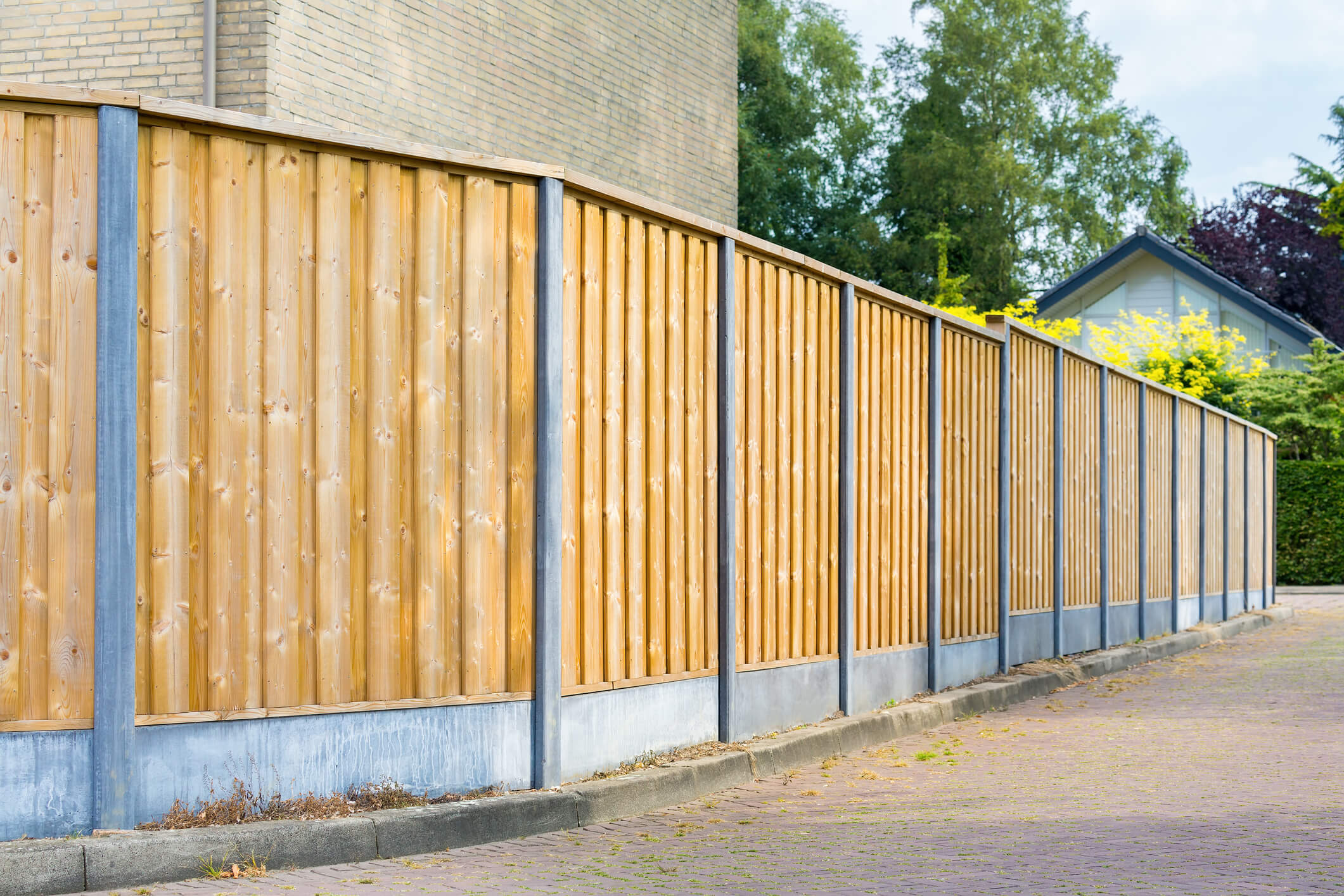
Boundary Fences In Southampton
When building a fence, it is common to place the outside face of the fence along the boundary of land so that the post is standing on the land of the fence owner. Depending on the positioning of the fence in relation to the boundary, there are a variety of fences to choose from. At Calvert Consulting I am available to help you with any boundary problems you may have.
Fencing and Boundaries
Some of the fences available for you to choose from include:
- Post and wire fence: metal or concrete posts which often have the outer face of the post placed against the boundary, allowing the wires ro thread through the centre of the posts
- Post and wire fence: if the posts are round timber the outer face of the post is usually placed against the boundary and the wires stapled to the outer face of the wooden posts
- Wooden panel and closed board fences: if the panels/boards are entirely contained between the fence posts, it’s usual for the outer face of the posts to be placed up against the boundary
- Closed board fences with rails attached: usually the boards outer faces are placed against the boundary
If a fence post requires a footing such as concrete, to ensure that it is securely fixed in the ground, it is perfectly normal to allow the footing to lie partly beneath the adjoining land. This does not give the neighbour the right to claim encroachment, as outlined in the Party Wall etc. Act 1996.